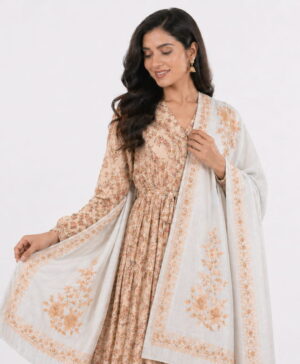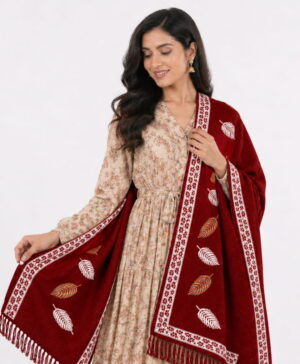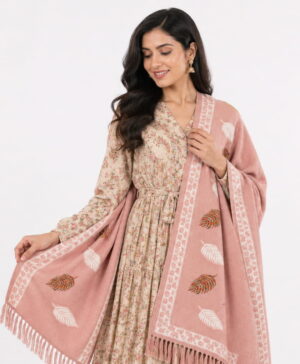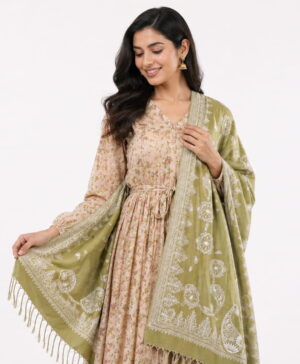
Most people think of wool as a strictly winter fabric — heavy, warm, and scratchy. That understanding, while not entirely wrong, misses a great deal of what makes wool one of the most versatile natural fibers available. The truth is that fine wool can be worn comfortably across a much wider range of conditions than most people realize, and its benefits go well beyond simply keeping you warm.
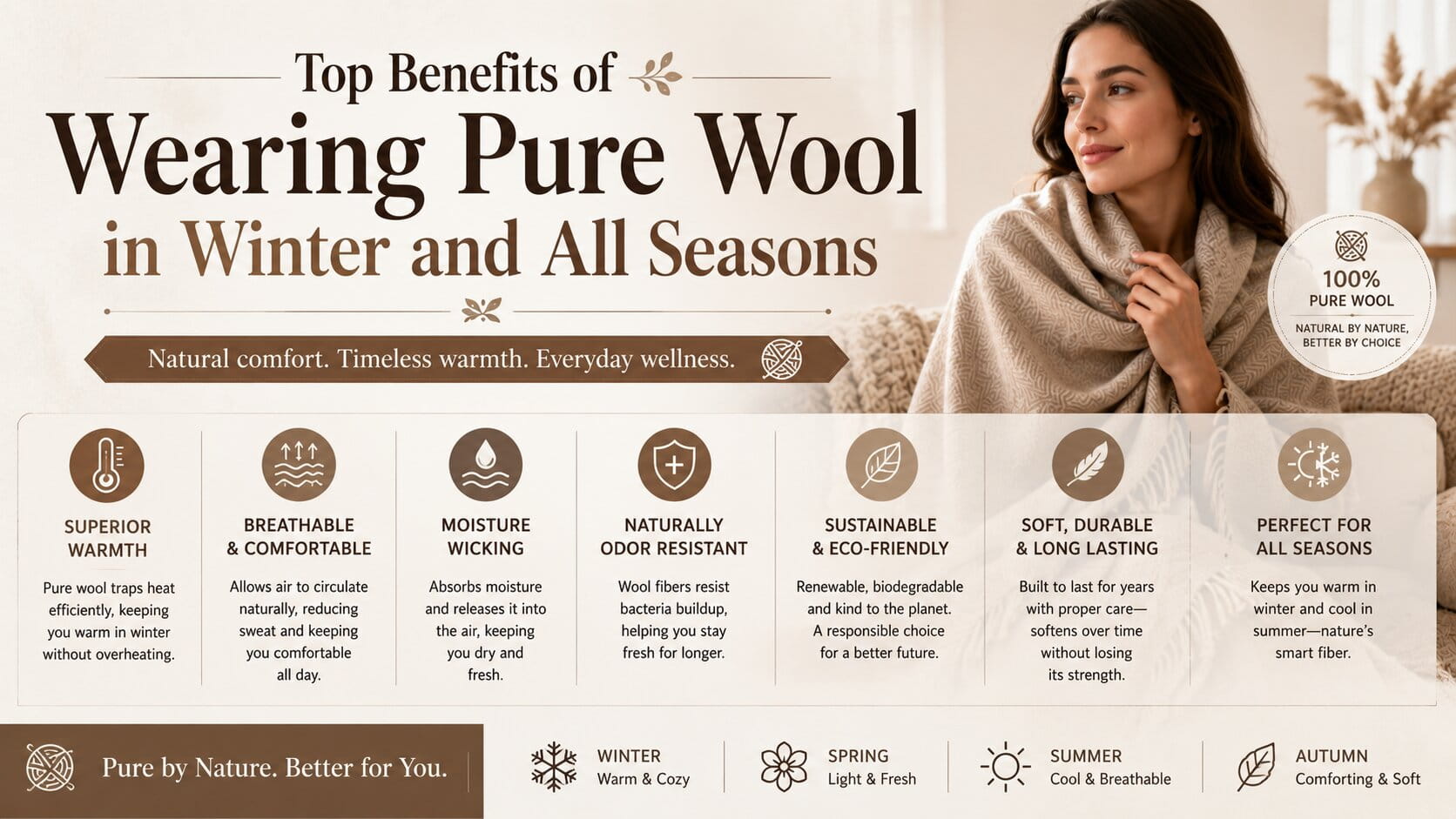
Start with the obvious: insulation. Wool traps air within its fibers, and trapped air is an excellent insulator. A pure wool shawl draped around your shoulders on a cold day creates a microclimate of warm air against your body that can make a remarkable difference in how comfortable you feel. But here is what surprises many people — this same mechanism that traps warmth also protects against heat. Fine wool worn in moderate temperatures acts as a buffer, keeping body heat from escaping too quickly while also preventing external heat from penetrating. This is why traditional wool garments are found in desert cultures as well as arctic ones.
Wool is naturally moisture-wicking and breathable in a way that most synthetic materials are not. Wool fibers can absorb up to 30 percent of their weight in moisture vapor before they start to feel wet. This means sweat is drawn away from your skin and released into the air gradually, keeping you comfortable even during physical activity. The result is that you stay warmer in cold conditions and cooler in warm ones.
For people who spend a lot of time in air-conditioned environments — offices, airports, long-haul flights — a fine wool shawl is genuinely one of the most useful accessories you can own. The chill of aggressive air conditioning can be miserable, and a lightweight wool shawl provides exactly the right amount of warmth without bulk.
Wool is also naturally odor-resistant. The same moisture management that keeps you comfortable also prevents the bacteria responsible for body odor from thriving. Wool garments can typically be worn multiple times between washings without developing unpleasant smells, which is great news both for daily wear and for travel.
From an allergy standpoint, fine-grade wool is far less irritating than its reputation suggests. The scratchy feeling associated with wool generally comes from coarser fibers above 25 microns. Merino wool, fine Himalayan wools, and pashmina are all well below this threshold and feel soft against even sensitive skin.
Finally, wool is biodegradable. At the end of its life — which, for a well-made pure wool shawl, may be decades away — it returns to the earth naturally. In a world increasingly concerned with the environmental cost of fashion, that matters.